Wastewater Disposal Wells

As water districts face the need to use more challenging water sources for potable water that require reverse osmosis, it creates a challenge for their engineering firms of how best to deal with the briny reject water. Wastewater and brine injection wells can be the best solution for a water district.
Underground injection can provide a disposal option when site geology, wastewater characteristics, regulatory requirements, and project objectives support its use. Developing wastewater disposal wells requires an understanding of both the waste stream and the subsurface environment where the injected fluids will be placed. Expected injection volumes, formation pressure, reservoir properties, and confining intervals can all influence project planning.
These considerations make subsurface engineering an important part of evaluating disposal wells. The proposed injection interval must be assessed for its ability to receive fluids under anticipated operating conditions while meeting applicable regulatory requirements. Engineering teams must also consider how the well will be constructed, operated, monitored, and maintained throughout its service life.

Industrial and oilfield clients often have a need to dispose of fluids associated with oil and natural gas production or industrial hazardous and non-hazardous fluids wastes into deep, isolated geological rock formation. Proper evaluation of the permeability, porosity and geologic sealing in a geologic formation proposed for well injection design is an important investigation to gain EPA and state approval.
For companies involved in oil and gas production, underground injection can also be part of managing produced water and other qualifying fluids associated with production activities. The appropriate regulatory classification depends on the source and characteristics of the fluid, the purpose of injection, and applicable federal and state requirements. Class II injection wells, for example, are specifically associated with fluids related to oil and natural gas production under the federal Underground Injection Control program.
IPT can assist in obtaining Class I, Class II, and Class V permits to allow the project to proceed. In addition, IPT can assist in the injection well’s design plan and field execution.
IPT can help with EPA permits, state regulatory compliance, and project management for your injection well.
- Natural Gas Storage Caverns
- saltwater disposal wells
- wastewater disposal wells
-
brine disposal wells
(Hazardous and Non Hazardous) - Injection well design
How an Injection Well Project Is Evaluated
Planning for injection wells begins with understanding the intended application and evaluating the subsurface environment. A municipal wastewater project may have different technical and regulatory considerations than a project involving oil and gas waste. However, both require sufficient information to characterize the proposed injection interval and evaluate how it may respond to injection.
Reservoir properties are an important part of this analysis. Porosity describes the void space available within a rock, while permeability describes its ability to transmit fluids. These characteristics, along with formation thickness, pressure, fluid properties, and other reservoir conditions, can influence anticipated injectivity.
The confining interval is another important consideration. Engineers and geoscientists evaluate the geologic units surrounding the proposed injection zone to understand the subsurface framework and support regulatory analysis concerning containment of injected fluids. Existing wells and other penetrations within the applicable area may also require evaluation because they can affect the assessment of potential fluid-migration pathways.
The volume and characteristics of the injected fluids should also be considered. Fluid chemistry can influence material selection, compatibility assessments, corrosion considerations, and operational planning. Anticipated injection rates and pressures provide additional inputs for well and facility design.
By addressing these factors early, IPT can help clients develop the technical basis needed for subsequent permitting, well design, and project planning.
Understanding the Underground Injection Control Program
The federal Underground Injection Control (UIC) program was established under the Safe Drinking Water Act to regulate underground injection and protect underground sources of drinking water. Injection wells are divided into six classes according to factors that include the type of fluid being injected, the purpose of injection, and the relationship of the injection activity to underground sources of drinking water.
Several of these classifications are particularly relevant to IPT’s underground storage and disposal work. Class I wells are used to inject hazardous and non-hazardous wastes into deep, isolated formations. Class II wells are used exclusively for fluids associated with oil and natural gas production. This category can include disposal of produced water associated with oil and gas production, enhanced recovery applications, and certain hydrocarbon storage activities.
Class V encompasses injection wells that are not included in Classes I through IV or Class VI. These wells are used to inject non-hazardous fluids underground and cover a broad range of applications and well configurations. The appropriate classification therefore depends on the specific project and should be determined using the applicable regulatory requirements.
Administration of the underground injection control program also varies by jurisdiction. EPA directly implements UIC requirements in some locations, while states, territories, and tribes with primacy administer their own approved programs. Some jurisdictions share responsibility with EPA. Project teams must therefore identify the applicable regulatory authority and requirements for the location and well class.
Permit development can require detailed technical information addressing the geology, injection zone, well construction, proposed operating conditions, monitoring, and injected fluids. Regulatory agencies may also require information concerning nearby wells, proposed testing, and other factors relevant to protection of underground sources of drinking water.
IPT’s permitting and engineering capabilities allow these regulatory considerations to be addressed alongside subsurface and well-design decisions. This integrated approach can be particularly useful for technically complex wastewater disposal wells and projects involving the oil and gas industry.
Injection Well Design Considerations
After the subsurface environment and regulatory pathway have been evaluated, engineering can progress into detailed injection well design. The appropriate configuration depends on the well class, target interval, depth, fluid characteristics, anticipated operating conditions, and permit requirements.
Casing and cement programs are fundamental components of well design. Engineers evaluate the well’s subsurface conditions and regulatory requirements when determining casing depths, sizes, and cementing requirements. Depending on the well type, tubing and packer systems may also form part of the completion configuration.
Material selection should reflect the expected service environment. The chemical composition of wastewater, brine, produced water, or other injected fluids can create corrosion or compatibility considerations. Understanding those conditions allows materials and equipment to be evaluated for the proposed application.
Anticipated injection pressure and rate also influence the engineering process. These operating parameters must be considered in relation to formation conditions, well construction, surface equipment, and permit limitations. Surface injection systems should therefore be evaluated together with the downhole design rather than treated as an unrelated component of the project.
Well integrity remains important after construction. Design decisions can affect subsequent monitoring, testing, maintenance, and regulatory activities. Accounting for these requirements during the engineering phase helps create a well configuration aligned with the project’s technical and regulatory framework.
From Well Design to Field Execution
An injection well project involves more than preparing a well schematic. Subsurface analysis, regulatory permitting, detailed engineering, drilling, completion, testing, and surface facilities must be coordinated as the project advances.
Once engineering and permitting requirements are sufficiently defined, project planning can address drilling and completion procedures, equipment, contractors, scheduling, and regulatory milestones. IPT’s project management and field execution capabilities allow technical decisions made during planning to remain connected to field activities.
Field execution can also generate information that requires engineering review. Actual formation conditions, drilling observations, logging results, cementing information, and testing data can provide additional insight into the completed well. Engineers can evaluate this information in the context of the design basis and applicable regulatory requirements.
Coordination with regulatory agencies and inspectors may also be required at various stages of construction and testing. Maintaining organized technical documentation throughout field execution supports subsequent reporting and regulatory review.
For wastewater disposal wells and disposal wells associated with the oil and gas industry, this connection between subsurface engineering, permitting, well engineering, and field execution provides continuity across major phases of the project.
Monitoring, Mechanical Integrity, and Regulatory Compliance
Regulatory responsibilities continue after an injection well has been drilled and completed. Monitoring and reporting requirements vary according to the well class, permit, jurisdiction, and operating conditions. Operators should follow the requirements established for the individual well and applicable UIC program.
Depending on those requirements, operators may need to monitor injection pressure and track volumes of injected fluids. Records can provide information about well operation while supporting required regulatory reporting. Changes in operating data may also warrant additional technical evaluation based on the circumstances and permit requirements.
Mechanical integrity is another important consideration for regulated injection wells. Applicable UIC requirements may include mechanical integrity testing or other demonstrations related to well condition. The specific testing methods and frequency depend on the well classification and governing regulatory program.
Wellbore integrity should also be considered when planning maintenance, workover activities, and eventual plugging and abandonment. Maintaining accurate well records and regulatory documentation provides useful information for engineering evaluations throughout the well lifecycle.
IPT can assist clients with the technical and regulatory aspects of these activities. This support can be particularly relevant when regulations change, operating conditions evolve, or additional engineering analysis is needed to address a regulatory requirement.
Reverse Osmosis Brine and Municipal Wastewater Disposal
Reverse osmosis can allow water providers to treat challenging source water, but the process also produces a concentrated reject stream that requires appropriate management. Depending on the location and project, underground injection may be evaluated as one potential approach for managing this brine or concentrate.
Determining whether injection is appropriate requires more than identifying a deep formation. Engineers must consider the characteristics and anticipated volume of the wastewater, available subsurface formations, reservoir properties, confining geology, well construction requirements, and the applicable underground injection control program.
A technically suitable project also requires coordination between subsurface evaluation and regulatory planning. The proposed injection zone must be characterized, and the well must be designed for the anticipated conditions. The project team must also develop the information required by the applicable permitting authority.
These same principles can apply to industrial wastewater disposal, although the specific well classification and regulatory requirements depend on the waste stream and proposed injection activity. For oil and gas waste, separate Class II requirements may apply when the fluids meet the regulatory criteria for association with oil and gas production.
Natural gas storage in salt caverns provides a reliable and flexible method for managing supply and demand, offering rapid injection and withdrawal capabilities essential for energy security. Specialized drilling engineering and project execution services are critical to the success of these storage wells. This includes comprehensive well planning, detailed engineering design, and safe, efficient drilling and completion operations. With a focus on technical precision and regulatory compliance, these services ensure the integrity, performance, and longevity of storage wells in salt formations.
300+
Disposal Wells
38+
Counties
9+
States

I’ve been impressed by the expertise and partnership provided by IPT Well Solutions in supporting NGL Water Solutions’ underground injection control (UIC) regulatory compliance across Colorado and New Mexico. Their insightful guidance on interpreting and adhering to both established and emerging regulations has seamlessly integrated with our robust internal frameworks, enabling us to maintain the highest standards of operational excellence while effectively optimizing compliance-related costs. IPT’s collaborative approach has truly added value to our team, and I highly recommend their services to others in the industry.
Doug White,
EVP, NGL Energy Partners
Wastewater Disposal Well Project Experience
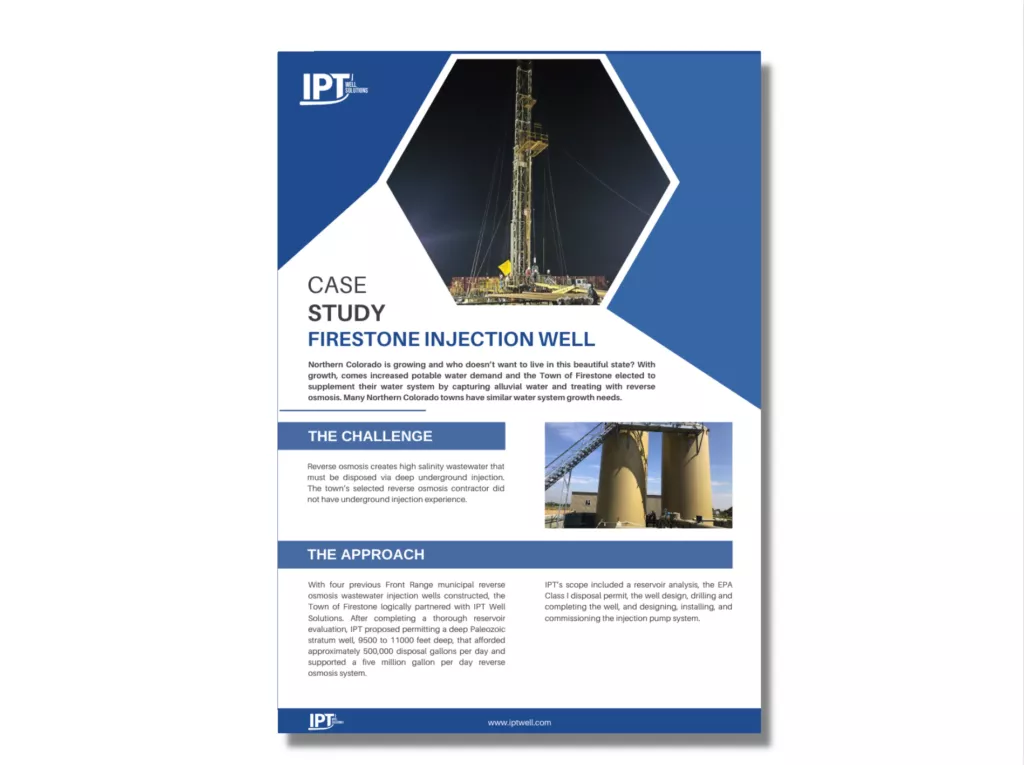
IPT’s wastewater injection well experience illustrates how these disciplines can come together during project development. A municipal disposal project may begin with reservoir and geologic analysis to identify and characterize a potential injection interval. The engineering team can then use this subsurface information to support regulatory permitting and develop the well design.
As the project advances, drilling and completion engineering can translate the design into field procedures. Testing and other technical information collected during construction can support evaluation of the completed well and required regulatory documentation. Surface injection equipment may also need to be incorporated into the overall engineering scope.
This coordinated approach allows wastewater disposal wells to be evaluated as complete subsurface projects, with geology, reservoir behavior, well construction, facilities, permitting, and field execution considered throughout development.
View Case Study
Underground Storage and Disposal Well Support From IPT
Injection and disposal projects bring together subsurface engineering, well engineering, permitting, field execution, and ongoing regulatory considerations. IPT supports clients across these disciplines for municipal and industrial wastewater projects, oil and gas industry applications, and other underground storage and disposal projects.
For projects involving wastewater disposal wells, IPT can assist with formation evaluation, reservoir analysis, permitting, injection well design, and project execution. For qualifying oil and gas waste applications, IPT can support Class II injection well projects and associated regulatory requirements.
IPT also assists clients in navigating federal and state requirements that apply to injection wells. By connecting regulatory work with technical analysis, the project team can develop documentation based on the geology, well design, injected fluids, and proposed operating conditions of the individual project.
Whether a project involves a new disposal well, evaluation of an existing well, or support with regulatory compliance, IPT provides engineering and consulting capabilities across the injection well lifecycle.